8 critical talent acquisition and recruitment trends in 2026
Employer branding, internal mobility and AI use in recruiting -- by both recruiters and candidates -- are among the trends recruiters and talent acquisition teams will face in 2026.

Talent acquisition and recruitment are being affected by some major trends for 2026. CHROs and other C-suite leaders who work with HR should make sure they are aware of these trends so they can plan accordingly.
AI is currently at the front of almost every software vendor's strategy, with vendor conversations about their recruitment software kicking off with the software's range of AI capabilities. However, not all AI features can address real-world challenges. Meanwhile, skills-based workforce management is taking shape at many organizations.
Here are eight ongoing and emerging trends that every CHRO should consider when creating their recruiting strategy in 2026.
1. AI and automation
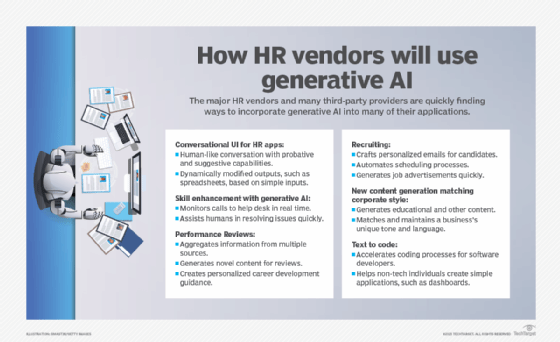
AI-powered recruitment is becoming increasingly popular for talent acquisition, but candidates are getting smarter about how to use AI, which brings a new set of challenges for recruiting teams.
AI takes many forms, and CHROs and CIOs must understand how AI can help their company. An organization's AI strategy should include how HR managers and recruiters will use AI for recruitment and acquisition. The company's current ATS vendor should offer AI capabilities, but senior HR leaders need to ensure that their vendors are adding features that will actually improve recruiting practices and not just excite industry analysts or check a box.
For example, a company's current ATS might include AI-assisted job description writing, but if the organization already has a job description catalog and HR employees are not regularly creating new job descriptions, this feature might not be useful. On the other hand, a feature that can quickly and accurately screen candidates and provide feedback can potentially reduce time spent on candidate screening. A CHRO can use that candidate screening tool to demonstrate that HR is using new technology to drive efficiency and create business value.
However, AI brings new challenges as well. Multiple lawsuits have been filed that claim that some AI recruiting tools are biased, and a lawsuit was recently filed against AI hiring company Eightfold. The lawsuit claims that it is unfair that applicants cannot learn about the information that Eightfold's AI tool finds about them online.
Also, some candidates are using AI to apply to a large number of jobs in a short amount of time, which leads to a massive volume of applications for recruiters to sort through. Some companies now reject all candidates that apply within the first few hours of a job being posted, assuming that the early round of applications was created using AI-based applications software.
2. Skills-based hiring
The emphasis on skills in workforce management, workforce planning and talent acquisition is changing how organizations hire. Skills-based hiring is hiring candidates based on their competencies and demonstrated abilities instead of prior roles and qualifications.
Skills-based hiring can include using specific measures and assessments to identify and quantify candidate skills, and AI plays a big role in these processes. For example, a candidate skills test might use AI to evaluate the prospective worker's performance.
3. Data-driven decision-making
Analytics has been a growing trend over the last few years. Cloud adoption and enterprise software vendors' focus on data applications – driven mainly by the need to feed AI models -- have led to enterprise-grade HR analytics becoming more accessible and more relevant, which can lead to better decision-making.
Analytics can help CHROs identify strengths and weaknesses in the company's talent acquisition processes and reduce the cost of talent acquisition. Also, talent analytics can help CHROs demonstrate the effectiveness and ROI of recruiting software investments.
Analytics can provide recruiters with such metrics as the following:
- Source of hire.
- Time to fill
- Time to hire.
- Age of job or how long a job has been open.
- Offer acceptance rate.
- Cost per hire.
- Quality of hire.
- Vacancy cost, which is how much it costs the organization while the position remains vacant.
- Diversity-related statistics.
Predictive analytics, another category of tools that is gaining popularity, can help recruiters predict future trends such as estimated candidate performance, time to fill, interview acceptance probability and candidate tenure.
5. Employer branding
Employer branding has emerged as a prominent recruitment trend in recent years.
Employer branding showcases a company's culture, values and work environment. Many job seekers look beyond salary and benefits because they are seeking an employer that aligns with their personal values and offers a fulfilling work experience, such as providing career development opportunities.
A strong employer brand can significantly improve a company's ability to attract top talent, reduce turnover and improve overall employee engagement. It can also reduce recruitment costs because prospective employees might seek out the company instead of recruiters having to identify candidates.
CHROs should ensure HR allocates time to crystallize their company's employer brand and then pursues strategies such as compiling employee testimonials and creating a strong social media presence.
Employer branding is just as relevant for small and mid-sized companies. Smaller companies can differentiate themselves by emphasizing their unique strengths and showcasing their opportunities for personal and professional growth.
6. Pay transparency
Pay transparency continues to be a major topic worldwide. Many employers are now obligated to disclose salary ranges, either in job postings or upon request, and are prohibited from asking candidates about their current salary.
These rules affect the pay information that companies must store in their HRIS and add to job postings. They also affect how recruiters can discuss pay with a candidate.
CHROs should consider implementing bias and ethics training to ensure unconscious bias does not influence offers made to candidates and recruiters do not breach regulations when discussing pay.
7. Internal mobility
Companies are increasingly shifting toward internal hiring and upskilling and reskilling their current employees. Pursuing this strategy can reduce risk because leaders already know how an employee performs, and it enables an organization to shape an existing employee into the ideal candidate.
Shifting to a new role within the same company can be popular with employees as well, as they might see it as a way to gain new skills and experience without having to seek out a new job.
8. Changing workforce demographics
The demographics of the workforce are set to change considerably in the coming years because of AI and the impending retirement of baby boomers, among other factors. AI agents may replace some entry-level jobs and administrative roles that carry out repetitive tasks.
Baby boomers' retirement could lead to a loss of employee knowledge if the proper knowledge capturing is not carried out. Developing talent, so younger employees can fill roles as older employees retire, is also important.
Executive conclusion
CHROs, CIOs and other C-level leaders need to ensure their strategies account for recruiting and talent acquisition trends so their companies are not left behind in the marketplace.
Leaders must be aware of the value and risks of using AI for recruiting and ensure that their company's recruitment strategies support skills-based hiring. Data can help HR leaders make better decisions, and topics such as employer branding and pay transparency remain crucial for organizations.
Luke Marson is a principal architect and part of the management team of a global SAP SuccessFactors consulting partner, where he focuses on SuccessFactors Employee Central, extensibility and integration technologies.