
Getty Images
Vendors hawk everything AI; retailers take measured approach
The vendors will build it, but will the retailers come?

It's not that retailers don't want to use every single cool agentic AI tool offered by vendors. It's that fragmented data, variegated application stacks, and pesky fluctuating margins and tariffs cause drag on their spending power to deploy all that technology.
That said, the National Retail Federation's NRF '26: Retail's Big Show last month was abuzz with agentic AI tools.
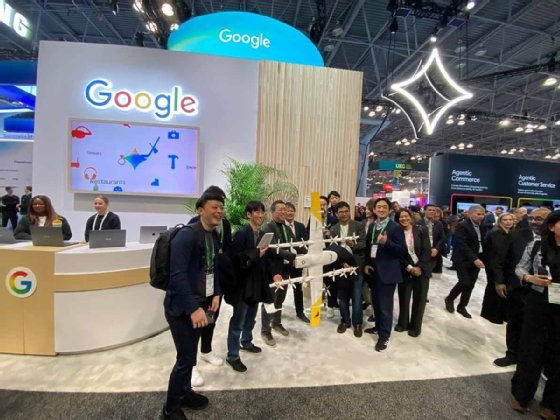
More than a thousand exhibitors showed agents that were small and tactical -- such as computer vision to detect shoplifting from security video, or to fetch data from down the supply chain -- up to sweeping, grandiose unveilings like Google's: a complete customer experience platform, Universal Commerce Protocol (UCP) adoption and drone delivery systems for customers such as Walmart.
"Not many of us really understand exactly where [AI's] going to take us, but we know it's going to change the world," said Ed Stack, the executive chairman of Dick's Sporting Goods -- son of founder Dick Stack -- in a keynote fireside chat with Bob Eddy, chairman, president and CEO of BJ's Wholesale Club Holdings Inc.
"Right now we're looking at AI really as a productivity tool, more than a replacement of personnel," he continued. "I think that AI is going to change everything we're doing. It's going to change what we do from a marketing standpoint, what we do from an assortment standpoint."
Eddy said that BJ's is deploying AI to solve complex problems such as logistics replenishment for its stores. Take the example of a store that earns $40 million a year in revenue, while another earns $200 million. Modeling inventory plans for such contrasting locations is difficult for humans.
"Those two cases are so wildly different that an average -- even a really good -- logistics planner has a very, very tough time figuring out those two models," Eddy said. "AI does it in 10 seconds."
Agents are coming, but what will they do?
While AI in general was on the minds of attendees and exhibitors, they weren't talking much about agentic AI specifically. But the exhibitors were. They predicted a mass of agents that will perform tasks such as marrying supply-chain data systems to store inventory and analytics tools that predict demand and bring manufacturer operations closer in harmony with chain stores.
Retailers who are early adopters of Salesforce's agentic AI want to create sales agents that think like in-store associates who guide shoppers, said Gordon Evans, chief marketing officer of Agentforce Commerce (formerly Commerce Cloud).
"[Let's say] you're shopping for jewelry. You want to buy a gift for me for the holidays," Evans said. "You clearly have something in mind. You want a story behind that. You want this perfect item."
Replicating a personalized in-store consultation online will likely require orchestrating multiple agents to poll inventory systems, analyze browser behavior and access the customer's order history. Working together, agents could make recommendations that are tightly personalized enough to secure consumer buy-in.
"How would a store associate be able to take all that input and look at a bunch of different things that would make sense for you? How do we bring that experience into an agentic experience?" Evans said. "I think that's going to be the next challenge: how we have multi-factor agents -- or maybe an agent that orchestrates other agents -- to essentially deliver the business value."
At the NRF show, Google released its agentic AI platform, Gemini Enterprise for Customer Experience. Early customers include Kroger, Lowe's and Papa Johns. The company also unveiled checkout tools and Direct Offers for retailers to reach consumers who browse in AI Mode and bypass traditional search engine results.

The open UCP standard for e-commerce, developed by Google and Shopify with feedback from Etsy, Wayfair, Target, and Walmart, provides a common language to enable these experiences across commerce sites. Many companies, such as Salesforce, Mastercard, Stripe and American Express, have signed on as partners. Customers can permit agents to complete transactions with UCP, which also promises to manage the handoff between agent and human merchandisers or customer service agents.
"The UCP has really been built so that [a company's] brand voice shows up," said Jose Gomes, vice president of Retail & Consumer at Google Cloud. "We want to make sure that the brand is able to tailor [experiences] based off what they know about you and your history. Getting all of that into the UCP has been super important."
The holy grail of agentic AI -- bots that buy things on behalf of consumers and businesses -- still seems to be far off, because consumers don't necessarily fully trust AI with their pocketbooks yet. Also, they love to shop, whether in-store or online, and aren't yet ready to give up the dopamine hit of shopping to an AI agent.
That could change as consumers get used to the idea and retailers modernize their commerce and inventory data systems, said independent analyst Brendan Witcher. Judging by the customers paraded by technology vendors, only the largest of the large retail chains are the early adopters of agentic AI -- even though the vendors discuss it as if everyone's doing it.
"History is the best teacher of everything. Right now, when you hear the message about agentic AI, what's really happening is they're targeting companies with the balance sheets of small countries," Witcher said. "We saw the same thing with cloud computing. Midsize companies didn't move things into the cloud until it came downmarket, the prices got cheaper and the tech got easier. The same thing will happen with agentic AI."
Consumers will eventually come around to using agents for routine recurring purchases, Witcher predicted, sort of like they set up Amazon subscriptions for things like soda water or dog food.
Darshan Kantak, vice president of product for Applied AI at Google, also believes agentic AI will eventually find widespread adoption in retail.
"I remember living in Brazil 12, 15 years ago, and the first ride-hailing apps for taxis happened. No one hailed a taxi like that, and they went to 80-year-old grandmothers hailing a taxi like that in three months," Kantak said. "That, to me, was the best example of how technology adoption [works]. Once we start solving problems for people in a really easy-to-use way, in a timely manner, adoption will increase disproportionately."
Witcher cautioned that, while some consumers will welcome shopping agents, others might never embrace the technology. Most of us, he predicts, will save in-store visits for big purchases such as furniture or a refrigerator.
"There is no one-size-fits-all when it comes to consumer shopping," Witcher said. "There never will be. That's why we still have e-commerce, but we also still have stores."
Tactical deployment the near-term AI strategy for retail
Technology vendors fantasize about multi-agentic orchestration, with AI "super agents" that will manage teams of simpler, task-oriented agents. The reality on the ground is that customers are primarily deploying agents that do one thing at a time, if they're deploying any agents at all.
Agentic AI might have endless capabilities and be the foundation on which to run a business. Still, the hard truth is that most users of the technology must build a data foundation before they can tap AI's potential. In the case of The Paper Store, a U.S. chain of more than 100 specialty gift stores, that meant the company had to standardize its catalog on a product information management system from Akeneo.
"We're really focusing on back-end data structure for product information, how to structure it in order to be able to start achieving successful use of some of these AI platforms," said COO Craig Hewitt.
The Paper Store is currently testing personalization tools on their commerce website, but it's challenging because "the customer isn't very forgiving when it comes to our testing," Hewitt said, as the company gets its data house in order. He envisions AI delivering more personalized information to customers based on how they're searching -- providing expanded product information, for example, or rendering how a particular home-décor item The Paper Store sells might look in the customer's home.
Online intimates retailer Thirdlove, known for its deep selection, such as half-sizes that aren't available in physical stores, has begun deploying AI to personalize its customer hub. There will always be a time and place for in-person shopping, said chief marketing and digital officer Amy Carr, but AI can help raise the standards of online shopping experiences, bringing them closer to what customers might expect from a physical store.
"I think an agent can do a lot around customer service; I think an agent can do a lot around product recommendations, with a little bit of data," Carr said. "That's kind of where we're starting."
Trigo, an Israeli startup that uses AI to scan store security footage to detect shoplifting, is an example of single-focus generative AI. At the moment, the agent's findings are relayed to store employees, such as cashiers and security, and even the shoplifting customers themselves, by rules-based systems. But Trigo co-founder and CEO Daniel Gabay sees a not-too-distant future in which agents will autonomously perform many more tasks than loss prevention.
"We're creating the data platform that all of the agents [will] run on," Gabay said. "We're trying to [bridge] this missing link between the video feed to agents -- running on the cloud, usually -- analyzing the video feeds to generate data for different applications … We have generated an application, but our vision is to open it completely, add many capabilities, [and enable] others to create additional capabilities."
Don Fluckinger is a senior news writer for Informa TechTarget. He covers customer experience, digital experience management and end-user computing. Got a tip? Email him.
Dig Deeper on Customer Experience
-
![]()
Edge series - Codenotary: Only agents can monitor agents
By: Adrian Bridgwater
-
![]()
Lantern CEO: Commerce protocols will decide who wins the AI shopping spree
By: Adrian Bridgwater
-
![]()
AI agents move from experiment to operations in UAE retail
By: Andrea Benito
-
![]()
Alphabet borrows $100bn to pay for AI investments
By: Cliff Saran