HR software buying mistakes to avoid
The HR system selection process is rife with the potential for mistakes. Learn about some of the most common errors and how the HR software buying team can avoid them.
Evaluating and selecting a new HR system is typically a lengthy and detailed process. HR software buying teams need to understand common mistakes and how to avoid them.
Once the HR software buying team comes together, members can define the potential risks upfront and monitor them throughout the process to ensure that the risks are mitigated. Failure to mitigate risks can have long-term consequences, including high costs or implementing a system that fails to meet the organization's needs.
Here are common mistakes that can occur during the HR system buying process and tips on how to avoid them. The issues and tips have been broken down into five main categories based on the steps in the software acquisition process and considerations for the buying team.
Project initiation
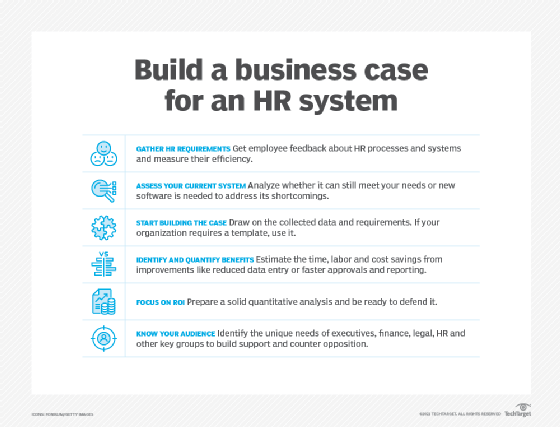
Before looking at specific vendors and applications, the selection manager should initiate the project by developing a business case and requirements, as well as evaluating the company's current HR systems. Here are some common mistakes that teams make during this time:
1. Skipping the business case
Making the business case is a crucial part of the HR software buying process.
The business case is an opportunity to outline various aspects of the software acquisition project and secure approval to invest time and money. The business case typically outlines the project goals, high-level budget, requirements and timeline. Setting realistic objectives at this stage is important to ensure that the team doesn't over-promise and then under-deliver.
2. Beginning the process without budget approval
Securing a budget commitment is crucial to do before the HR software purchasing process begins.
A lengthy and time-consuming evaluation that doesn't result in a purchase because the budget was never approved is a waste of time and money and can also potentially damage HR's credibility. Additionally, vendors are reluctant to invest time and energy in a process that's unlikely to yield a sale.
3. Decreasing the budget to get approval
The team might want to decrease the budget amount if team members think their current amount is unlikely to secure approval. This strategy might work in the short term, but a member of the team will likely have to request more money once the project is underway.
4. Moving forward without clear executive sponsor buy-in
Lack of executive buy-in means no guarantee of approval or securing a budget.
Also, critical stakeholders might not be able to give a time commitment. A lack of available time can lead to a bad decision or, even worse, no decision.
5. Giving vague time requirements
Failing to confirm time commitments with stakeholders is common but will likely also lead to project failure.
Confirming upfront that the buying team can devote the time needed to evaluate all software under consideration is critical. It might be necessary to backfill some positions to help the core team clear their schedules for the task.
6. Failing to clarify goals
The buying team must establish certain goals for the process.
For example, what is the organization trying to achieve beyond selecting software through the evaluation? What challenges is the organization experiencing that the vendor can solve? What else is HR trying to achieve? For example, the HR department might want to establish itself as a key player in the organization or introduce self-service options for the first time.
Whatever the goals are, the team must make sure they are clear from day one.
7. Defining requirements without stakeholder approval
Defining requirements is very important. The HR team needs to define system requirements so the buying team can select the right system. The requirements should be ranked in order of importance and include critical items such as security.
Additionally, the HR team must also understand the system requirements of other stakeholders and obtain approval so the buying team can select software that will meet cross-organizational goals.
8. Failing to evaluate current HR systems
Before investing time and money to find a new system, the project leader should review the features of the current HR systems to determine whether the company needs new functionality to solve challenges. Also, they should check to see if there are features that might have been turned off during the original implementation that can easily be enabled.
If the project leader discovers previously unknown features in the current HR system that address company needs, the company might be able to avoid buying a new HR system altogether.
Buying team review
The buying team is tasked with reviewing software applications and vendor information to identify the system that best meets the organization's requirements. Here are some mistakes that the group could make during that process.
1. Failing to involve other departments
Including IT in the HR software selection process is key, even if the HR team believes that they know what they want from a system.
Failing to involve IT could negatively affect IT's ability to implement, integrate and support the HR system. IT brings critical technical and systems know-how to the process and can also ensure that the system can be adequately maintained in-house.
The evaluation team also needs to include other stakeholders who can look at the various systems from a different perspective than HR. For example, the team should invite an employee and people leader representative as well as employees from security and finance.
2. Having tunnel vision
Failing to evaluate all vendor functionality can be detrimental to the buying process.
HR will likely begin the software evaluation process by focusing on specific capabilities, but they should look at all the software's processes and capabilities. The software might include tools that HR didn't realize the organization needs but could redefine HR's strategy or the HR technology roadmap.
Additionally, the project team's focus needs to be on the system’s functionality, such as how it can improve processes and the overall user experience. Focusing too much on individual features might lead to the team ignoring pain points that could make the system difficult to use.
However, the team should acknowledge that perfection might be difficult to achieve. A limitation with one feature could be the price required for a system that meets most of the company's requirements.
3. Enabling vendor bias to occur
Some team members may have previously seen a demo at a user conference, used certain software at a previous company or spoken to a friend who uses the same software and has had a positive experience. Team members might demonstrate a particular bias toward one vendor or software despite evidence that a different product would be better for their company.
Changing this perception can be challenging, but managing or mitigating bias in team members is possible.
4. Getting oversold on certain features
The project team needs to stay focused on the requirements and avoid becoming overly influenced by features that aren't necessary or won't significantly benefit the organization.
Of course, team members shouldn't ignore all features that aren't included in the requirements document. However, unnecessary features shouldn't have a major effect on the team's eventual software selection.
5. Failing to organize demos
The leader of the buying team should ensure that demos are well-organized, including creating an agenda, setting clear expectations for attendees, and following up with participants shortly after the demo.
The time of both the vendor and employees is valuable, so the buying team leader should ensure that the demo is a good use of everyone's time. Additionally, remembering which vendor offered which features can be challenging after sitting through multiple demos, so asking participants for feedback immediately after the demo is crucial.
Software evaluation
The software evaluation portion of the buying process includes discussions with vendors before, during and after the demonstration. Avoiding some common issues during the evaluation process is crucial.
1. Failing to discuss cost
The smaller the HR software budget, the more quickly the buying team needs to understand the cost of a specific HR system. Spending time evaluating applications that are significantly above the organization's budget is a waste of time for everyone.
The vendor salesperson should be able to provide a cost estimate based on a few factors, such as the number of employees.
2. Failing to ask the vendor about nuts and bolts
All product demonstrations must be tailored to meet the specific needs of a particular HR department. Otherwise, the vendor will focus only on the most impressive parts of the system and discuss them from a high-level perspective.
The vendor should be asked to customize the system based on HR's processes and usage requirements. Demo participants should ask the vendor to delve into the details and ask any necessary questions about the vendor, their roadmap and the support they will offer during and after the implementation.
3. Evaluating a small number of vendors
The buying team of a large organization will likely consider the big three HR technology vendors: Oracle, SAP SuccessFactors and Workday. However, other vendors might be a better fit for what HR is trying to achieve.
The buying team should evaluate a wide range of vendors before creating a shortlist of two or three vendors for deeper analysis.
4. Reviewing too many applications
Hundreds of HR applications are available, so the project team must quickly identify the ones that are most likely to meet the organization's needs.
Attending demos can be very time-consuming, so having the buying team sit through demos for products that will ultimately not be the right fit is not a good use of their time. The selection manager should confirm that key features are available in the application before scheduling a demo.
However, the buying team should avoid asking about every requirement. Vendors tend to provide short answers once the list gets too long. The buying team should focus on the key features that would make or break the deal.
5. Evaluating the software more than the vendor
The vendor is just as important as the software.
The buying team should evaluate whether the vendor is a good fit for the company, whether it can deliver on its promises and whether it will support HR.
Vendor selection
After the demos, key members of the buying team and the project sponsor decide on a product and negotiate a contract with the preferred vendor. Here are some pitfalls to avoid during that process.
1. Making a hasty decision
HR teams might focus on solving immediate problems and fail to create a long-term HR technology roadmap, which could lead to future issues with the product selected. Everyone on the team should understand the technology strategy to ensure the chosen vendor can support all of the department's requirements.
HR might need to make small sacrifices now to gain functionality later.
2. Ignoring major application shortfalls
Some buying team members might want to move forward with a product that doesn't meet key requirements because of reasons, including salesperson promises and a personal desire to work on a big implementation.
Other team members should ensure that the team isn't choosing an application that lacks important features.
3. Failing to check references
The selection manager should speak with references before the company signs a contract. The references provided by a vendor typically share positive feedback, but they might also offer some good insight into the product.
Buying team members should also check with their network and see if they know anyone who is currently using the software or has used it in the past and can provide feedback. A buying team member can also look at online reviews of the application and vendor.
4. Negotiating too aggressively or not aggressively enough
While a company should get a good deal on new software, overly aggressive negotiating behavior can harm the relationship with the vendor.
For example, the vendor might try to recoup money later in the process.
However, software vendor negotiations should be pursued until the price feels reasonable for the functionality, including the annual licensing fee and implementation. A third party carrying out the implementation might require a separate negotiation.
5. Making incorrect assumptions
The buying team should review the contract and ensure that any questions are addressed.
Implementing changes is significantly more challenging once the contract is signed and the project has begun, and changes could come with an associated cost.
Implementation
The software implementation should be considered during the buying process, as its details could influence which vendor is chosen and the project timeline.
Here are some common issues to avoid during product implementation.
1. Failing to consider other internal projects
Companies often have multiple projects underway simultaneously, and resources must be allocated for an HR system implementation. Managers might have to move work around or hire temporary employees to backfill for implementation team members. Securing a commitment from other department leaders for resources, if they’re needed, such as employees from IT and finance, is also important.
Considering other projects is also critical because asking employees to deal with too much change at once could affect user adoption of the new application.
2. Failing to solicit expert advice
The project team should ask experts for advice so it understands decisions before configuration changes are made.
Asking for advice can involve reaching out to internal experts or relying on external consultants. For example, if the new HR system will affect payroll, someone from the payroll team should be included on the implementation team, even if they only serve on it part-time.
3. Failing to create a project plan
A project plan provides team members with a clear outline of expectations, which is particularly important when employees are working on the project part-time and need a quick way to confirm when they’re required.
Vendors often offer an implementation template for their customers if needed.
4. Overlooking the scope of data migration work
Data migration can be a major part of an implementation. It's necessary to build in time to test the data migration before the final migration takes place.
Avoiding errors, if possible, will save time and issues later. Data migration errors can be difficult and time-consuming to resolve and can have a long-term effect on reporting and analytics.
Editor's note:This article was updated in December 2025 to improve the reader experience.
Eric St-Jean is an independent consultant with a particular focus on HR technology, project management and Microsoft Excel training and automation. He writes about numerous business and technology areas.
Luke Marson is a principal architect and part of the management team of a global SAP SuccessFactors consulting partner, where he focuses on SuccessFactors Employee Central, extensibility and integration technologies.