How to build an AI-augmented workforce: The CIO's guide
An AI-augmented workforce pairs humans with AI to boost performance. Learn ways to build it, review examples, know the challenges and explore future trends shaping enterprise roles.

As artificial intelligence (AI) reshapes industries, forward-thinking CIOs are shifting their strategies from automation-first to augmentation-first. Their goal is to equip employees with AI tools that strengthen their judgment, spark creativity and boost productivity.
In an AI-augmented workforce, humans and AI systems work collaboratively, not competitively. Rather than replacing employees, AI is used to enhance human capabilities, automate routine tasks and provide insights that help people make more informed decisions and focus on higher-value work. A McKinsey & Company survey found that 91% of employees report their organizations use at least one AI technology, with over half specifically using generative AI tools such as ChatGPT.
For any CIO seeking to use AI effectively, it's important to understand the essential components of an AI-augmented workforce, how it's built and why it's central to creating a future-ready organization.
How an AI-augmented workforce works
An AI-augmented workforce is an organizational model where humans and machines collaborate to achieve more together. AI handles repetitive, data-heavy tasks, while employees focus on creativity, strategic thinking and problem-solving. Unlike traditional automation, which replaces human labor, AI augmentation is a human-centric approach that uses AI as a powerful tool to enhance human creativity, judgment and expertise.
Key characteristics of an AI-augmented workforce include the following:
- Human-AI collaboration. AI acts as a copilot, not a replacement for human workers.
- Empowered employees. Workers are trained and equipped to use AI tools effectively.
- Continuous learning. Organizations invest in reskilling to adapt to evolving AI capabilities.
The advantages of this approach extend to employees and the organization. The following are some key benefits of an AI-augmented workforce:
- Reduced mundane tasks. AI automates repetitive, time-consuming work such as data entry, reporting and scheduling, freeing employees to focus on strategic, creative and high-impact initiatives that add real value.
- Enhanced decision-making. By analyzing large volumes of data quickly and accurately, AI provides actionable insights that empower employees to make smarter, faster and more informed decisions.
- Skill development and growth. AI collaboration exposes employees to new tools, workflows and analytical approaches, fostering continuous learning to help employees bridge the AI skills gap and develop valuable capabilities for an AI-driven workplace.
- Enhanced productivity and efficiency. Automating routine tasks and providing real-time insights lets teams complete work more efficiently and accurately, reducing bottlenecks and enhancing organizational performance.
- Better innovation. With AI handling repetitive and analytical work, employees can dedicate more time to creative problem-solving, experimentation and designing new products or services that drive meaningful innovation.
- Improved agility. AI equips businesses with predictive analytics and real-time insights so they can anticipate market shifts, respond quickly to customer needs and emerging risks, and adapt their strategies with greater speed and precision.
- Enhanced employee experience. By reducing repetitive workloads and equipping employees with AI tools that simplify complex tasks, businesses improve engagement, satisfaction and retention, creating a more motivated and empowered workforce.
8 best practices for building an AI-augmented workforce
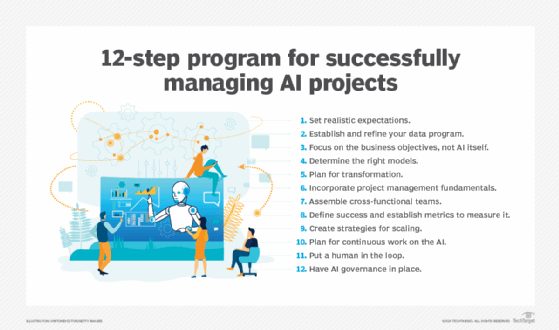
For CIOs and other business leaders, successful AI integration requires a strategic shift from simple automation to human augmentation. The following best practices outline the steps required to build a powerful and productive AI-augmented workforce:
- Prioritize augmentation over automation. Leaders should focus on how AI can enhance human judgment and creativity, not just replace jobs. AI can be used as an alternative for tasks that are tedious, repetitive or data-intensive, letting skilled employees work more efficiently. AI augmentation goes beyond simply cutting costs through automation.
- Identify high-value use cases. Companies should prioritize areas where AI can deliver the greatest value, such as data analysis, predictive insights, process automation or customer engagement, to ensure AI initiatives are strategic and purpose-driven.
- Invest in employee training and empowerment. A truly augmented workforce requires employees who are AI-literate. Businesses should equip employees with the skills to collaborate effectively with AI, including training in prompt engineering, data literacy and ethical AI use, with continuous learning tailored to specific roles and use cases.
- Redesign workflows. Simply layering AI onto outdated workflows risks amplifying inefficiencies. Instead, business leaders should work with department heads to reengineer processes from the ground up. This approach enables a deliberate division of labor, where AI takes on tasks such as drafting, summarizing and triage, while human-centric talent concentrates on judgment-intensive activities such as final decision-making, exception handling and client engagement.
- Establish governance and ethical guardrails. Businesses must enforce strong policies regarding data privacy, security and the ethical use of AI-generated content. For example, they should define human-in-the-loop protocols to ensure that an accountable employee always reviews final, critical decisions involving customers or sensitive data.
- Measure and communicate ROI for augmentation. Leaders measure AI's impact on ROI and core business value metrics, such as time-to-market, quality-of-output, employee retention and customer satisfaction. Transparently communicating these successes across the organization is key to building trust and encouraging broader adoption.
- Encourage cross-functional collaboration. AI initiatives succeed when IT, operations and business units work together from the outset. Breaking down data silos ensures AI tools address real business problems, are technically feasible and are adopted effectively across teams. Collaboration also encourages shared ownership of AI outcomes, promotes knowledge transfer and fosters a culture where employees feel confident using AI tools in their work.
- Start small, scale fast. Launching AI projects as focused pilot programs lets businesses test tools, measure their effectiveness and gather feedback without overcommitting resources. Successful pilots create proof points that build executive support and employee confidence. Once validated, businesses can scale initiatives efficiently, expanding AI use across multiple teams or processes to maximize impact, reduce risk and accelerate adoption.
Challenges to building an AI-augmented workforce
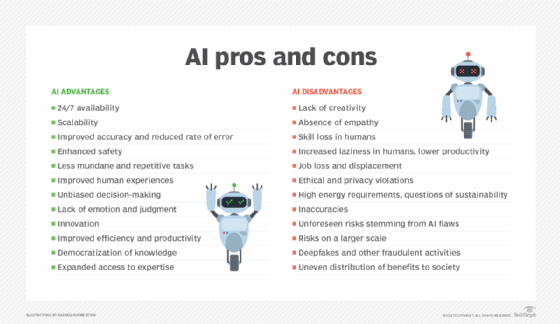
Building an AI-augmented workforce presents several challenges that businesses must proactively mitigate. Key challenges include the following:
- Employee resistance and fear of job displacement. Workers often view AI implementation as a threat to job security, leading to resistance, decreased morale and sabotage attempts of AI initiatives. Businesses should communicate to employees that AI is an augmentation tool and not a replacement. They should also provide retraining programs, define career paths and highlight success stories of employees who have benefited from AI collaboration.
- Skills gap and training complexity. Many employees lack the technical literacy needed to work effectively with AI systems. Concurrently, the rapid pace of AI's evolution makes it difficult to keep training programs current and relevant. Businesses should develop tiered training programs that accommodate different skill levels and learning styles. They can partner with educational institutions and AI vendors to provide specialized training and establish internal programs that pair tech-savvy employees with those requiring additional support.
- Data quality and integration issues. AI systems require high-quality, consistent data to function effectively. But many organizations struggle with fragmented data sources, inconsistent formats and poor data governance practices. Businesses should implement comprehensive data governance frameworks before deploying AI systems. They should invest in data cleaning and standardization tools and establish cross-functional data stewardship teams responsible for maintaining data quality. Clear data ownership and accountability structures should also be defined across departments.
- Ethical concerns and bias in decision making. AI systems can unintentionally perpetuate or amplify existing biases, resulting in unfair treatment of employees or customers. Additionally, opaque AI decision-making can introduce ethical and legal risks. Businesses should establish AI ethics committees with diverse representation, conduct regular bias testing and algorithmic audits, define clear guidelines for human oversight and ensure AI decisions are transparent and explainable to all stakeholders.
- Technology integration and legacy system compatibility. IT infrastructure in some organizations might not support modern AI applications, requiring significant investment in system upgrades or creating complex integration challenges that slow deployment. Businesses should conduct thorough technical assessments before selecting AI tools and choose platforms that offer effective AI integration with existing systems. They should plan phased technology upgrades to minimize business disruption and consider cloud-based AI approaches to reduce infrastructure requirements.
- Change management and cultural resistance. Sometimes organizational culture might resist the collaborative mindset required for human-AI partnerships, especially in traditional industries or hierarchical organizations where change adoption is typically slow. Business leaders should be engaged as active advocates of AI initiatives. They can begin with departments most open to change and use those successes to influence broader adoption. Creating cross-functional teams also helps break down data silos and foster collaboration.
- Measuring ROI and demonstrating value. The benefits of AI augmentation can be difficult to quantify, especially soft benefits, such as improved decision-making and employee satisfaction. To help justify continued investments in AI, businesses should establish clear baseline metrics before implementing AI and use quantitative and qualitative frameworks to assess the impact. They should track user adoption, productivity gains and other key indicators. It's important to regularly communicate this value to stakeholders.
- Regulatory compliance and legal risks. Evolving regulations around AI use, data privacy and algorithmic decision-making can create compliance challenges, particularly in regulated industries such as healthcare and finance. Businesses should stay informed about emerging AI regulations and industry standards and involve legal and compliance teams early in AI planning processes.
- Vendor dependency and technology lock-in. Over-reliance on specific AI vendors or platforms can create risks if vendors change pricing, discontinue services or fail to keep pace with technological change. To avoid vendor lock-ins, businesses should diversify vendor relationships, prioritize open standard-based approaches and data portability, build internal AI capabilities, and include exit clauses and clear data ownership provisions in their contracts.
- Cybersecurity and privacy vulnerabilities. AI systems can create new attack vectors for cybercriminals and might process sensitive employee or customer data in ways that increase privacy risks. Businesses should implement AI-specific security protocols and monitoring systems, conduct regular security assessments of AI applications, ensure compliance with data privacy regulations and train employees on AI-related security best practices and potential threats.
Examples of AI-augmented teams in the enterprise
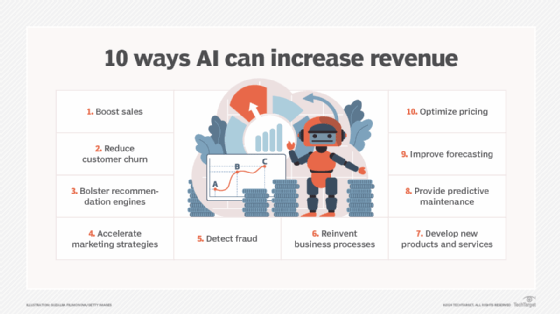
AI-augmented teams are transforming enterprise functions by pairing human expertise with intelligent tools. The following real-world examples illustrate how AI augmentation is reshaping the enterprise:
Customer support
Traditionally, customer service representatives handle inquiries, complaints and support requests through phone, email and chat channels. In an AI-augmented workforce, AI chatbots manage routine tasks, such as password resets, order status checks and basic troubleshooting, so human agents can focus on complex problem-solving, emotional support and relationship building.
AI tools also provide sentiment analysis to gauge customer emotions in real time, while predictive analytics recommend optimal resolution strategies based on similar past cases. For example, Salesforce deploys AI assistants to help support agents' triage tickets, suggest responses and summarize customer histories, reducing resolution times and improving customer satisfaction.
Finance and accounting
Before AI augmentation, finance and accounting teams were primarily responsible for collecting, processing and analyzing financial data to produce reports, forecasts and investment recommendations.
With the advent of AI, repetitive tasks, such as invoice processing, expense reconciliation and fraud detection, have been automated, while human analysts focus on financial planning, risk assessment and strategic decision-making. For example, Morgan Stanley uses AI-powered tools to summarize client meetings and analyze large data sets, enhancing efficiency and accuracy in financial decision-making.
Product development and R&D
In product development, AI assists in analyzing customer feedback, simulating designs and identifying market trends. Human teams focus on innovation, experimentation and creative problem-solving. Many businesses are integrating AI into process automation and design workflows, letting engineers iterate faster and bring products to market more efficiently. For example, AI-powered modeling tools quickly evaluate multiple design variations, predict performance outcomes and identify issues before physical prototyping begins.
In R&D, AI accelerates discovery by analyzing vast data sets, such as material properties and chemical compounds, helping teams uncover insights that would take months or even years to find manually.
Legal work
Traditionally, legal teams were responsible time-consuming and detail-intensive processes, such as contract review, regulatory compliance, risk assessment and legal research. Today, AI tools are transforming these functions, drafting and reviewing contracts, flagging inconsistencies, analyzing clauses for compliance risks and summarizing lengthy legal documents in seconds. Lawyers can therefore devote more time to high-value activities, such as complex negotiations, strategic planning and advising clients on the legal implications of new initiatives. For example, professional services provider Cognizant uses AI agents to score contract risks and recommend operational actions to enhance productivity while maintaining high-quality legal outcomes. Some legal departments also use AI for e-discovery, conducting due diligence in mergers and acquisitions and for monitoring regulatory updates.
Marketing
Marketing teams have been responsible for creating campaigns, managing brand presence, analyzing market trends and generating sales leads. Today, generative AI augments marketing functions, personalizing content and ad targeting at scale, optimizing campaign performance in real time, and generating creative concepts and copy variations. For other marketing functions, machine learning is used to analyze customer journey data and identify optimal touchpoints. Predictive AI models forecast campaign ROI and recommend budget allocation strategies. Both approaches enable more effective, data-driven marketing decisions.
Human resources
HR teams have long managed recruiting, onboarding, performance management and employee relations across the enterprise. AI now augments these HR functions, screening resumes, scheduling interviews and identifying top candidates based on job requirements and cultural-fit indicators. During onboarding, AI-driven assistants help new hires navigate company systems, complete training modules and get personalized recommendations for learning and internal networking opportunities.
AI chatbots increasingly handle routine inquiries about benefits, payroll and workplace policies, freeing HR professionals to focus on strategic work, such as talent development and organizational culture. Predictive analytics is used to analyze engagement scores, feedback trends and behavioral data to identify employees at risk of turnover and help HR intervene early with retention strategies. Sentiment analysis of employee communications lets HR proactively address workplace issues, improving engagement and retention.
Operations and supply chains
Traditionally, operations and supply chain teams have relied on historical data, manual tracking and periodic reporting to plan production, manage inventory and coordinate logistics. These processes often struggled to keep pace with real-time market shifts.
Today, machine learning algorithms analyze data streams from sales, suppliers, weather patterns and even social media to forecast demand with greater accuracy, so teams can optimize inventory levels, minimize waste and reduce costly overstock and stockouts. AI can identify process bottlenecks, recommend schedule adjustments and dynamically reroute shipments when disruptions occur.
Companies such as Walmart use AI to predict purchasing patterns and optimize logistics, improving operational efficiency and responsiveness to market changes. Similarly, manufacturers and retailers use predictive maintenance models to detect equipment issues before they lead to downtime, saving both time and resources.
Software development
Software development teams have been responsible for designing, coding, testing and maintaining software applications and systems. AI now augments software development workflows, providing code completion and generation tools that accelerate programming, while automated testing identifies bugs and security vulnerabilities. In addition, machine learning can analyze code quality and suggest optimizations, while AI assists with documentation generation and code reviews, so developers can focus on higher-value design and problem-solving tasks.
Future trends of AI-augmented work
As AI technologies mature, the relationship between humans and machines will deepen, moving beyond task automation to true collaboration. According to a Gallup survey, 40% of U.S. employees report using AI in their roles at least occasionally, signaling that AI-augmented work is an emerging reality. More adaptive, intelligent systems that learn from human behavior and context are expected to be prominent in the next development phase. They'll be able to deliver personalized assistance, real-time decision support and predictive insights across most business functions.
The following key trends are shaping the next phase of AI-augmented workforces:
Hyperpersonalized AI assistants
Unlike today's one-size-fits-all tools, next-generation AI assistants will tailor their interfaces, recommendations and interaction styles to align with each worker's cognitive preferences and professional context. The future workplace will have AI assistants tailored to individual work styles, preferences and expertise. These systems will learn an employee's decision-making patterns, communication style and productivity rhythms to provide increasingly personalized support.
As these assistants become more intuitive, workers will experience AI that feels like a natural extension of their thinking process, leading to seamless human-AI collaboration and improved productivity without the learning curve that often accompanies new technologies.
Generative AI embedded in daily workflows
Generative AI is rapidly evolving from a standalone tool into an integrated layer within enterprise systems. By 2026, generative AI capabilities will be embedded across core platforms, such as productivity suites, CRM systems, ERP tools and collaboration environments. Instead of toggling between applications, employees will interact with AI within their existing workflows as demonstrated by the following examples:
- Sales teams will use embedded AI to auto-generate personalized outreach emails based on CRM data.
- Legal teams will receive contract summaries and risk flags directly within document review platforms.
- Product managers will collaborate with AI agents inside planning tools to simulate feature impact and generate user stories.
This change will make it easier for people to use AI. It will accelerate adoption and help integrate AI into everyday work. It will also let humans and AI collaborate in real time to complete tasks together in the same digital space.
Predictive workforce analytics and proactive management
Advanced AI will play a pivotal role in anticipating workforce needs, performance trends and emerging challenges, often before they surface. These systems will continuously analyze patterns in productivity, collaboration, communication and external market dynamics to forecast staffing requirements, flag burnout risks and recommend optimal team compositions for specific projects.
As a result, HR and management decisions will shift from reactive to proactive approaches. Instead of responding to issues after they arise, AI will prevent them altogether. This evolution will drive higher employee satisfaction and lower turnover. It will also enable more strategic, data-informed workforce planning.
Human judgment will become more valuable
As AI systems take on routine tasks, such as drafting content, summarizing data, triaging requests and surfacing insights, the value of human judgment will increase. In this new division of labor, AI will handle task execution, while humans focus on higher-order thinking: interpreting nuance, making ethical decisions, managing exceptions and building relationships.
This shift will reposition employees from tool operators to strategic decision-makers. The following examples show the future AI-enabled workplace:
- A compliance officer would use AI to scan thousands of documents for anomalies but still make the final call on regulatory risk.
- A product manager could rely on AI to generate user stories and market analysis, yet decide which features align with long-term strategy.
- A customer success lead would use AI to flag churn risks but still determine how best to engage and retain high-value clients.
Redefinition of roles and skills
In the AI-augmented future, roles will be redefined as the value of human contribution shifts from task execution to strategic oversight and informed judgment. While highly repetitive jobs will be the most susceptible to automation, demand will grow for skills that enhance and guide AI capabilities.
Employees will need AI fluency, including prompt engineering and tool orchestration, to effectively direct intelligent systems. Critical thinking and contextual judgment will be important, helping workers assess AI outputs, apply ethical reasoning and bring empathy to decisions that affect people and outcomes.
Ultimately, success will hinge on the ability to understand how AI agents interact with and reshape entire organizational workflows, not just isolated tasks. This holistic mindset will be essential for designing resilient, human-centered workplaces where AI serves as a strategic partner rather than a standalone option.
AI-supported well-being and work-life balance
AI-driven intelligent systems will play a role in promoting employee well-being and sustainable productivity. By automating repetitive administrative tasks, such as scheduling, reporting and data entry, AI will free employees for more meaningful, creative and strategic work. This reduction in cognitive load will help prevent burnout and improve overall job satisfaction.
Beyond automation, AI will proactively monitor workload patterns, communication rhythms and collaboration intensity to detect early signs of fatigue or disengagement. The following examples demonstrate how AI monitoring will work:
- AI could flag when an employee is consistently working outside normal hours or skipping breaks.
- It might suggest calendar adjustments, recommend focus time or prompt managers to check in with overloaded team members.
- Personalized nudges could encourage healthier work habits, such as taking breaks, prioritizing tasks or disconnecting after hours.
These systems will also support mental health and work-life balance by integrating with wellness platforms, offering mindfulness prompts, and tailoring recommendations based on individual preferences and performance trends.
Kinza Yasar is a technical writer for WhatIs and has a background in computer networking.
Dig Deeper on Enterprise AI Strategy
-
![]()
The hidden cost of AI automation: Preserving organizational expertise
By: Mary Shacklett
-
![]()
Tech sector job losses show AI replacement in action
By: Cliff Saran
-
![]()
Dubai rolls out AI training for 50,000 government staff
By: Andrea Benito
-
![]()
Humans and AI: The role of people in the new AI world
By: Olivia Wisbey