Understanding the origins of complexity in enterprise software
Enterprise software portfolio complexity grows quietly as ERP, HR, CX and UC platforms integrate with AI and legacy systems, creating hidden dependencies and operational costs.
Enterprise platforms rarely stay confined to the roles they were originally designed to serve in the first place. Over time, they become embedded in a broader operational ecosystem -- one where capabilities, integrations and dependencies begin overlapping across the enterprise software stack. That overlap is one reason enterprise software portfolios often become more complex than organizations initially expect.
Unified communications (UC) platforms illustrate how this portfolio complexity develops. UC as a service (UCaaS) provides a common platform that makes it easier for enterprises to integrate many parts of communications and collaboration.
Today, the debate is not really about cloud versus on-premises deployment anymore. Instead, it centers on capabilities that transcend traditionally siloed communications systems. The structural realities of UCaaS make it attractive for that reason and because organizations no longer need to manage the infrastructure behind the platform themselves. Service providers operate and maintain the environment, which can simplify operations and reduce internal management overhead.
But that shift does not eliminate enterprise responsibility. Even when communications platforms move to the cloud, organizations still share responsibility for governance, security controls and integration with the rest of the enterprise software stack.
UCaaS is no longer a transformational technology, but rather a standard part of enterprise infrastructure. The market for UCaaS platforms is now largely mature: More than 90% of organizations have already adopted UCaaS in some form, making it the predominant communications model for enterprises.
Integration expands complexity across platforms
Cross-platform integration introduces new friction.
Many enterprise platforms -- including ERP, HR, CX and UC software -- are now delivering automation and AI-driven features simultaneously. When these tools begin operating across the same environment, organizations can quickly find themselves managing overlapping automation layers.
AI agents operating across different enterprise platforms can easily create new problems if they do not run on a shared governance and data foundation. Without some form of orchestration or middleware to coordinate those systems, organizations risk creating a new kind of feature sprawl -- one driven not by applications, but by competing AI capabilities.
Feature comparison across platforms is already complicated. In many cases, enterprise feature checklists resemble comparisons between apples and oranges rather than apples to apples. A vendor might advertise AI assistants, advanced analytics or automation capabilities, but the meaning of those features can vary widely between platforms.
Why enterprise software comparisons rarely stay apples to apples
Enterprise software buying decisions rarely begin with the intention of building a complicated technology portfolio. Most organizations start with a simple goal: Choose the best platform for a specific need.
But enterprise platforms rarely remain isolated.
A UC platform integrates with CRM systems. HR platforms connect to ERP financial data. Collaboration tools link to identity systems, workflow engines and analytics layers. Over time, individual software decisions accumulate into a portfolio of interconnected platforms.
That interconnectedness changes how comparisons work.
A UC platform might offer AI assistants. A CX platform might offer automation workflows. HR systems might include workforce analytics. ERP vendors might bundle forecasting tools. On paper, those features can look similar. In practice, they often operate very differently.
The real comparison is no longer between individual platforms alone. Instead, it becomes a comparison between how those platforms interact across the enterprise software stack.
That shift turns software selection into a portfolio decision rather than a product decision.
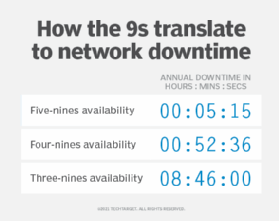
Reliability becomes an economic decision as well. The difference between four nines and five nines of availability might appear small on paper, but the resulting downtime translates directly into operational exposure and financial loss.
Differences in platform availability -- often expressed as 'nines' of uptime -- translate directly into real-world downtime and operational risk for enterprises.
Cloud consolidation moves complexity elsewhere
UCaaS also illustrates another shift in enterprise environments: Consolidation in one area can create complexity somewhere else.
Cloud-based communications platforms replace large amounts of on-premises infrastructure. That transition reduces hardware sprawl, simplifies management and enables organizations to offload operational maintenance to service providers, and it's why sustainability in UC has become part of the conversation around modern communications platforms. But these same platforms often introduce new dependencies across the enterprise ecosystem.
Hidden complexity inside enterprise environments
In reality, platform decisions rarely exist in isolation. They must also account for the environment in which those platforms operate.
In practice, that environment is often more complicated than organizations realize.
Many enterprise IT environments contain a mix of legacy software, locally stored data and one-off configurations that were never fully documented. In these environments, the biggest modernization risk is often what organizations do not know about their own systems. Unknown dependencies and undocumented configurations introduce variables that can surface later as operational problems.
But knowledge reduces risk, even if uncovering that knowledge is uncomfortable. And sometimes that discovery process is messy.
Operating system migrations often expose these issues. Upgrading from Windows 10 to Windows 11 requires organizations to evaluate applications, system configurations and legacy dependencies as part of broader Windows 11 migration planning.
Why modernization projects often reveal what organizations didn't know
Many modernization efforts begin with a simple objective: Upgrade systems, deploy new capabilities, or move to cloud platforms.
What organizations often discover instead is a detailed map of their own technical history.
Enterprise environments accumulate complexity over time. Legacy applications remain in place long after their original purpose is forgotten. Configuration changes solve short-term problems but are rarely documented in detail. Integrations evolve as new systems are added.
Eventually, these layers create dependencies that few people inside the organization fully understand.
Major upgrades -- such as OS migrations, platform replacements or large-scale cloud transitions -- tend to expose those hidden dependencies.
Applications that once ran without issue suddenly reveal undocumented requirements. Legacy patches and compatibility workarounds surface during testing. Data stored in unexpected locations appears during migration.
This discovery process can be uncomfortable, but it also provides one of the most valuable outcomes of modernization: a clearer understanding of how the enterprise environment actually works.
And once that visibility exists, organizations can reduce risk, simplify systems and make future technology decisions with greater confidence.
Troubleshooting complexity often means simplifying systems
When systems become difficult to diagnose, IT teams often rely on a simple principle: Reduce complexity to identify the source of the problem.
Troubleshooting tools highlight the same reality. Administrators often isolate problems by reducing system complexity, such as using Safe Mode to troubleshoot systems. By running the OS with only essential drivers and services, administrators can isolate failures that might otherwise remain hidden within a full system configuration.
Even identical systems can behave differently across enterprise environments. Features available within a platform might not always be enabled by default. Print Management in Windows 11, for example, is an optional feature that must be installed before administrators can use it to manage printers and print servers across systems.
Complexity does not arise only from having too many tools. It also emerges from how those systems interact.
Enterprise complexity rarely disappears
These examples illustrate a broader truth about enterprise software portfolio complexity: Subtle differences between environments, configurations and platform capabilities across the enterprise are often the cause of it.
Complexity does not arise only from having too many tools. It also emerges from how those systems interact.
Cloud platforms can reduce complexity in some areas. But the integration capabilities that make those platforms valuable across the enterprise often shift complexity elsewhere.
Instead of managing infrastructure locally, organizations increasingly manage relationships across a growing ecosystem of platforms, services and vendors. The result is a technology landscape defined less by individual systems and more by how they interact with each other.
And in many enterprises, that interaction becomes the quiet source of complexity inside the enterprise software portfolio.
James Alan Miller is a veteran technology editor and writer who leads Informa TechTarget's Enterprise Software group. He oversees coverage of ERP & Supply Chain, HR Software, Customer Experience, Communications & Collaboration and End-User Computing topics.