Potential Salesforce pricing reset latest sign of 'SaaSpocalypse'
What on earth is an Agentic Work Unit?

Never mind the "SaaSpocalypse." The SaaS titans need to standardize their AI pricing.
Those who don't get on board risk relegation to the dusty heap of forgotten enterprise tech, stacked atop Wang computers, BlackBerry phones and XyWrite.
First things first: This SaaSpocalypse, which you may have seen mentioned in the news or social media, can be loosely defined as the existential threat to the biggest companies that host cloud applications -- Microsoft, Adobe, Salesforce, Workday, ServiceNow, SAP, Oracle and Atlassian, to name a few -- from homegrown agentic AI tools.
In effect, the SaaSpocalypse doomsayers posit, why pay for licenses for accounting, customer service, collaboration or creative applications when you can ask an LLM -- or build your own agent with rapidly evolving toolkits from OpenClaw, Anthropic, Google, OpenAI or Cohere -- to do the work?
Wall Street is the one declaring this an existential threat. Real money is leaking out of the stock market every minute. The Wall Street Journal calculates that investor fears about AI threats to SaaS giants have wiped out $1.6 trillion in stock value so far this year. More importantly, the AI unicorns are soaking up venture equity to the detriment of the SaaS ecosystem.
Whatever. Wall Street sees mirages all the time. Remember Webvan? Neither do we.
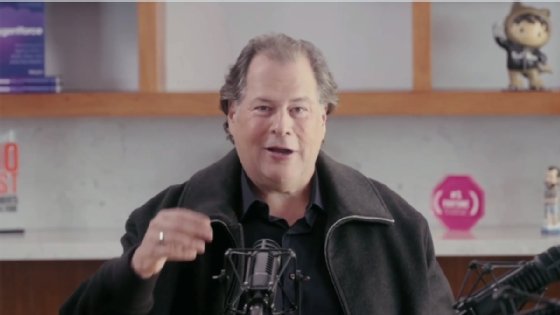
Salesforce CEO Marc Benioff, in yesterday's quarterly earnings webinar, glibly downplayed the idea of the SaaSpocalypse several times.
"If there is a SaaSpocalypse, I think it might be eaten by the SaaS Sasquatch," Benioff said. "There are a lot of companies using a lot of SaaS, because SaaS just got a lot better with agents as a service."
What Benioff gets about his customers -- and twitchy Wall Street investors don't -- is that the SaaSpocalypse is really a reprise of the age-old "build vs. buy" enterprise IT argument, rewritten by ChatGPT.
Salesforce, at its heart, is a platform that welcomes and needs developers to customize their Salesforce instances for each business. For sure. But even with new agents to automate processes and, we think, eventually perform autonomous work beyond pre-filling data fields and glorified search and summary, customers won't want to build, test, harden and secure their own core applications. Sure, some adventurous developer-centric companies will have the stomach for it, but most don't want to take on the liability.
And by the way, that goes double for users of SaaS apps in regulated industries such as healthcare and banking who have petrified their workflows for regulatory compliance over the years. It took a long time for these companies -- and government entities -- to migrate into the cloud, let alone adopt AI. The thought of "ripping and replacing" stable systems with a hot, new, unproven, headline-grabbing technology is antithetical to how they do business.
As this plays out, maybe upstart competitors will come up with some interesting AI-fueled challengers to the biggest SaaS companies. Competition is good; it keeps the old guard on its toes. But that isn't very apocalyptic.
Pricing is the real threat to SaaS
The real AI-SaaS problem is the malodorous swamp that has become pricing. Like a game of musical chairs, agentic AI is causing seat licenses to evaporate. The AI vendors have token billing schemes in a consumption pricing model that SaaS vendors pass on to users. Add this to consumption pricing that SaaS vendors often charge on top of base subscription pricing for bandwidth or storage, and it all can pretty quickly add up to a migraine-inducing surprise bill if a customer switches on too much AI.
So, SaaS vendors and AI vendors alike need to figure out more inventive and transparent pricing models. Salesforce, frankly, has been flailing the last couple of years with Agentforce pricing, having both a "$2 per conversation" model and a "credits," or tokens, model.
Although Salesforce leadership hasn't yet linked it to pricing, they introduced the concept of Agentic Work Units on Wednesday. New president and chief marketing officer Patrick Stokes pointed out that some customers use AI tokens more efficiently than others. Measuring the actual work an agent performs may be more relevant to everyone's business.
"When we started looking at that across our customers, we can start to see our top 10 customers are consuming this many tokens. We know how many tokens Salesforce is consuming internally," Stokes said.
"But it begs the question, 'Are they doing anything? Are they working? Are they providing any value? Or is it just input and output of intelligence?' So you can ask it a question. It can write you a poem. But that's not really all that valuable in the enterprise world. What's valuable is creating a document for you, or updating a record or [otherwise] helping us."
So that's interesting. The company line is that Salesforce believes that it is the only vendor that can put together an equation to measure the work agents do. It manages a customer's data, provides the platform for agents, and observes what agents do with all those tokens they consume. By bringing apps and agents together, Salesforce is creating an operating system for agents and humans to get work done in cooperation.
It's not the worst way of measuring AI consumption. Agentic Work Units put the customer at the center of the equation, not the LLM vendor. That's a good start.
By the way, don't let Salesforce fool you into thinking this is an exclusive idea: Zendesk is also experimenting with outcomes-based pricing for its AI agents, at best a work in progress. It has some pretty complicated wrinkles, such as classifying agents as "light" or "full."
In fact, the whole SaaS industry is collectively scratching its head trying to figure out how to replace traditional feature-based pricing.
Certainly more, if not every, SaaS company will come up with similar ideas. This will likely become a bandwagon. Rest assured that each vendor's pricing will be differentiated enough that salespeople will confuse CIOs and technology buying teams with endless lists of "benefits" and fuzzy math to make their product seem less expensive than the competition's.
Amid all this racket, remember that, in the end, Salesforce, Microsoft, Oracle, SAP, OpenAI, Anthropic, Cohere, Google, Elon Musk and all the other Big Tech players do not have the ultimate say over it. You, the customers, do. You decide which enterprise tech you'll pay for, the pricing models you will accept or decline, and how it's rolled out.
Salesforce has planted its flag on Agentic Work Units in hopes of steering the agentic economy. Customers -- some of whom are weary of a decade's worth of costly technological "transformations" that include cloud migrations, standing up data lakes and buying multiple flavors of AI -- no doubt would appreciate greater IT pricing stability. For them, it would be nice to forget about tech for a little while and get back to doing what they do best: actual business.
Don Fluckinger is a senior news writer for Informa TechTarget. He covers customer experience, digital experience management and end-user computing. Got a tip? Email him.
Dig Deeper on Customer Experience
-
![]()
Outcomes-based AI pricing works in theory -- but in practice?
By: Don Fluckinger
-
![]()
Salesforce Enterprise AI Harness latest salvo aimed at ServiceNow
By: Don Fluckinger
-
![]()
Customer service AI pricing just turned into the biggest shell game
By: Don Fluckinger
-
![]()
Salesforce productizes its own customer service AI agent for users
By: Don Fluckinger