How to address mobile compliance in a business setting
Mobile compliance now requires governance over how sensitive data is accessed across managed and personal devices. Here are practical steps for sustainable enterprise compliance.
Mobile compliance has become a core governance issue for modern enterprises. As smartphones and tablets are used to access customer, financial and operational data across industries, organizations must be able to demonstrate how that access is controlled, monitored and reviewed.
Unlike traditional endpoints, mobile devices operate across mixed ownership models, shifting networks and application ecosystems. Some devices are fully managed. Others are personal endpoints with limited enforcement. In both cases, compliance frameworks depend less on securing hardware and more on governing access to sensitive data across users, devices and applications.
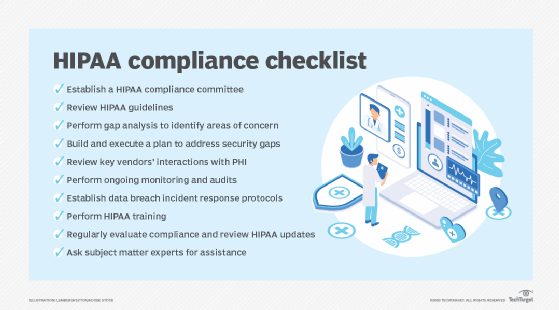
Regulatory frameworks such as the Health Insurance Portability and Accountability Act (HIPAA), the Payment Card Industry Data Security Standard (PCI DSS), the General Data Protection Regulation (GDPR) and state-level privacy laws differ in scope, but they share common expectations around access control, data handling, auditability and incident response. Mobile environments expose gaps in these areas faster than any other endpoint category.
Addressing mobile compliance requires organizations to rethink how policies, identity, application controls and monitoring work together across the device lifecycle.
What mobile compliance requirements are common in the enterprise?
Mobile compliance requirements vary by regulation, but they share a common set of expectations that apply across industries and jurisdictions. At a high level, organizations are expected to know what data is being accessed on mobile devices, who can access it and how that access is governed over time.
Across privacy, financial and healthcare regulations, mobile compliance typically requires organizations to do the following:
Define and enforce access controls for sensitive data based on user role, device context and application use.
Support audit and reporting requirements that demonstrate policy enforcement and access governance.
Enable incident response processes that can contain, investigate and remediate mobile-related data exposure.
Mobile environments make these requirements harder to meet because access is distributed across managed and personal devices, cloud-based applications and external networks. As a result, compliance efforts must focus on governing access and behavior rather than relying solely on device ownership or perimeter controls.
Mobile compliance requires governing how sensitive data is accessed, monitored and audited across devices, applications and users.
Why is mobile compliance so difficult to manage?
Mobile compliance is difficult to manage because organizations often lack consistent visibility and enforcement across the mobile device fleet. Unlike traditional endpoints, mobile devices operate across mixed ownership models, diverse operating systems and rapidly changing application environments.
In many cases, organizations cannot easily answer basic compliance questions, such as which users can access sensitive data from mobile devices, which applications are involved and whether access policies are enforced consistently over time. This lack of clarity becomes a serious issue during audits or incident response, when organizations must demonstrate how access was governed rather than simply assert that controls existed.
What can IT do to meet mobile compliance regulations?
Meeting mobile compliance requirements requires more than deploying security tools. Organizations must establish clear governance over how mobile devices access sensitive data, how policies are enforced across ownership models and how compliance is demonstrated over time. The following practices focus on aligning policy, access controls and operational oversight across the mobile environment.
Privacy regulations require organizations to demonstrate how mobile access to personal data is controlled and enforced across managed and personal devices.
Establish and enforce an organization-wide mobile policy
To meet regulatory requirements and reduce mobile risk, organizations should establish a clearly defined, organization-wide mobile policy. This policy should govern how sensitive data can be accessed from mobile devices, which applications and services are permitted, and how authentication and authorization are enforced across different device types and ownership models.
Enforcing these policies typically requires organizations to use mobile device management (MDM), enterprise mobility management (EMM) or unified endpoint management (UEM) platforms to apply controls and maintain visibility across the mobile environment. These tools support policy enforcement, monitoring and response, but they are effective only when aligned with clearly defined governance requirements.
IT departments in highly regulated industries may already have portions of this structure in place. In some cases, organizations manage mobile compliance internally. In others, they rely on third-party mobility managed services providers (MSPs) with experience supporting regulatory and audit requirements.
Implement an effective mobile security strategy across the device fleet
Mobile devices are at a higher risk of theft, loss or compromise in hybrid and remote work scenarios, thus putting sensitive corporate data at risk. Use an MDM platform to provide a standard level of encryption, secure authentication and remote wipe capabilities.
Managing corporate-owned devices makes implementing an effective strategy easier. Managing the compliance of BYOD endpoints becomes more challenging due to the diversity of configurations, mobile OSes and app versions across user devices. The only way to preempt these challenges is to spend the extra time to put in a support structure for BYOD, starting with device requirements governed by MDM policies to help ensure mobile compliance by the authorization of devices.
Institute a compliance plan for mobile users
Organizations without an internal compliance plan for mobile users should either build one, seek guidance from a consulting group familiar with compliance requirements or outsource mobile governance to a specialized provider. Enforcement actions over the past decade highlight how recurring gaps in mobile governance and policy enforcement have led to compliance failures across industries.
Jam City was fined $1.4 million in 2025 by California's Attorney General for alleged violations of the California Consumer Privacy Act (CCPA), including failures to honor opt-out requests and improper data sharing.
Uber was fined €290 million in 2024 by the Dutch Data Protection Authority for GDPR violations related to unlawful transfers of European drivers' personal data to U.S. servers.
Zoom was found to share users' personal data with Facebook without user consent, violating HIPAA regulations. In 2021, Zoom paid $85 million for failing to comply with HIPAA regulations. Allegations included Zoom sharing users' personal information with Facebook and Google without user consent and lying about its encryption practices.
WhatsApp was fined $267 million in 2021 for violating GDPR related to a May 25, 2018, update to its Terms of Service.
Bank of America, Barclays and Morgan Stanley are among the banks that have disclosed agreements to pay as much as $200 million because of employee use of unapproved messaging apps.
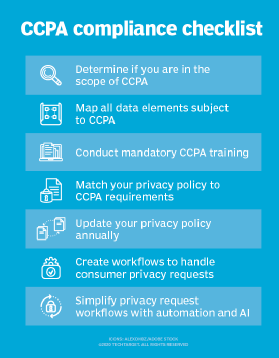
Also, the Attorney General of the State of California announced an investigative sweep in January 2023 focusing on mobile app compliance. They sent letters to businesses in the retail, travel and food services industries that allegedly failed to comply with the CCPA -- in particular, consumer opt-out requests or consumers who wanted to stop the sale of their data.
Regularly monitor and update software and devices
Just as IT teams must monitor and update the software, PCs and servers that comprise the corporate network, IT must extend a similar strategy over the corporate-owned and BYOD endpoints and software that interact with IT infrastructure and back-end systems to ensure security and compliance.
A useful reference point for mobile compliance best practices comes from the PCI Security Standards Council, the global body responsible for developing and maintaining payment security standards. The council's Mobile Payments on Commercial Off-The-Shelf (MPoC) Standard, most recently updated in late 2024, outlines modern security requirements for accepting payments on smartphones and other commercial mobile devices. MPoC reflects current mobile payment models and has effectively superseded earlier guideline-style publications, including the PCI Mobile Payment Acceptance Security Guidelines.
Maintain accurate records
Managing the mobile device lifecycle with its accurate records is a necessity in meeting mobile compliance regulations. Records include tracking which devices an organization issues to employees, which employees have access to sensitive corporate data, and what security measures are on employee devices.
Deliver ongoing mobile security training to all users
Hybrid and remote work require organizations to rethink how they educate their users about mobile security and compliance. Mobile device security can no longer be a module in an online security awareness training course that's fluffy, with little regard to specifics for the organization, leading employees to blow through the course so they can email their manager a PDF certificate.
Mobile security training in the hybrid and remote work era requires the following:
Dedicated mobile device training starting from the time of employee onboarding that focuses on security and compliance.
Publication and dissemination of mobile security-focused job aids and documentation through channels such as Notion or other centralized platforms.
Mobile security becoming part of team meetings and asynchronous communication channels such as Slack.
"Just-in-time" mobile security training as new threats surface in the industry or as the mobile security strategy changes.
Take mobile compliance seriously
Mobile compliance is no longer a secondary concern or a problem limited to highly regulated industries. As mobile devices become primary access points for sensitive data, organizations must be able to demonstrate how access is governed, monitored and reviewed across the mobile environment.
Mobile compliance depends on governing how sensitive data is accessed, monitored and reviewed across devices and applications.
Sustainable mobile compliance depends on clear policies, consistent enforcement and ongoing visibility into how devices, applications and users interact with sensitive data. Organizations that treat mobile compliance as a governance responsibility rather than a one-time security project are better positioned to meet regulatory expectations, support audits and adapt as mobile platforms and regulations evolve.
Editor's note: This article was updated in January 2026 to improve the reader experience.
Will Kelly is a freelance writer and content strategist who has written about cloud, DevOps, AI and enterprise mobility.
Jack Gold is the founder and president of J.Gold Associates, LLC and has been a technology analyst for more than 20 years.