Networking takes center stage at HPE Discover 2026
HPE unveils AI-focused networking strategy at Discover 2026, emphasizing Juniper integration, Agentic Mesh and new data center hardware platforms.

- Jim Frey,
-
Omdia
Intelligence and advice powered by decades of global expertise and comprehensive coverage of the tech markets.
At last June's HPE Discover 2025 conference, there was talk of networking as an essential pillar of AI infrastructure, along with announcements about new HPE Aruba networking products. But the pending Juniper Networks acquisition and the Department of Justice's opposition to it were muting factors. A short time after that conference, the DOJ dropped its opposition, and the deal proceeded. I shared my perspective on what all this meant last July.
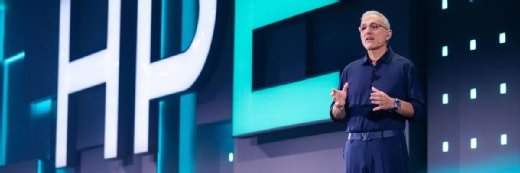
Since that time, there has been a full year of progress and eight months of direct integration activities between HPE and Juniper. And the storyline was much different at the 2026 HPE Discover conference. CEO Antonio Neri spent half of his opening keynote on networking, closing with three pieces of advice on how everyone in the room should proceed:
- Architect deliberately.
- Start with the network.
- Choose the right partner.
In my mind, this translates to "network, network, network!" All this focus on the network is not surprising, given the strategic nature of the Juniper acquisition and the need to show HPE customers -- and shareholders -- that this was the right move at the right time.
HPE's strategy for integrating Juniper also reflects a customer-centric view: All the integrations so far have been on the software side, except for the newly announced dual-boot Wi-Fi AP, which can work with either HPE Aruba Networking Central or HPE Mist.
No product lines are being deprecated, and HPE will continue to offer and support both Aruba Central and Mist until further notice. While most people expect some rationalization of overlapping product lines over time, the clear message at the event was that consolidation is not imminent, or even a priority, so customers should not be concerned about any of their existing kit going away.
The AI road to the self-driving network
Another big change to the conference was the networking keynote. It moved up to day one of the event, following Neri's keynote, from its traditional day two slot. Led by Rami Rahim, executive vice president and general manager of HPE Networking, the networking keynote focused on self-driving networking and the path toward automation and autonomy. In Rahim's words, networks need to be self-healing, self-optimizing and self-protecting.
For the most part, the road to self-driven networks is being paved with AI software. The company combined the legacy Aruba and Juniper AI teams into a single data sciences group, and the result of their efforts is the agentic mesh framework, which includes an agentic orchestration layer. The framework combines the best of what each original team had developed; it ties together all the various network product lines, whether they are legacy Aruba or legacy Juniper.
While others in the industry have focused on top-down integrations and single unified dashboards, HPE has taken a more bottom-up approach, allowing data and workflows to cross network and security domains. Importantly, this framework also ties networking into the broader, more holistic intelligent operations platform that HPE GreenLake Intelligence provides.
In addition, many specific new capabilities related to integrated, AI-powered management were announced, including the following:
- CX-series data center switches can now be managed with HPE Mist.
- Marvis Actions are now available from within HPE Aruba Central, making the same task automation capabilities available within HPE Mist to the Aruba network user community.
- HPE Mist Networking Data Center Assurance is now integrated with HPE Compute Ops Management and GreenLake, facilitating collaboration and cross-domain coordination.
Pushing the networking leading edge
HPE spent plenty of airtime at Discover focusing on the breadth and depth of products on the hardware side as well, reviewing new and recent offerings across the board for AI infrastructure networking:
- QFX5252. HPE's new commercial Ethernet switch for scale-up networking in AI factories, based on open UALoE standards and running SONiC. This switch is part of the AMD Helios rack infrastructure.
- QFX5250. HPE's latest scale-out switch, which is 100% liquid-cooled and delivers 102.4 terabit per second total capacity.
- QFX5140. A switch optimized for inferencing clusters, providing 16 Tbps of capacity in a 1 rack unit form factor.
- PTX12000. An 800G scale-across router for data center interconnect.
- MX301. A router optimized for the inference edge, providing 400G connectivity and 1.6 Tbps capacity.
Rahim also went into depth on HPE's network security strategy. One new announcement focused on a Unified SASE Orchestrator, which brings together a single platform for managing software-defined WAN and security service edge, along with a secure access service edge Copilot assistant.
Another item of note was the addition of AI awareness in SRX firewalls, which blocks unsanctioned AI applications while applying guardrails to permitted AI applications. The guardrails implement guidelines that allow or block sessions based on specific prompts, keywords or actions that users attempt to take with those apps.
The takeaway here is that HPE Networking now addresses all potential "networking for AI" needs, directly supporting and securing dedicated AI infrastructure from the data center to the branch.
Beyond networking
There was a lot more to take in at the conference, above, beyond and around the networking centerpiece. HPE is one of the few companies that can bring together the entire infrastructure stack, including compute and storage products, as well as services and financing. The day two keynote, led by HPE CTO Fidelma Russo, covered the following:
- Data strategy, including HPE Data Fabric and the Alletra Storage products.
- Air-gapped options for HPE Private Cloud PC3000 and PC7000.
- An expanded HPE Private Cloud AI offering, now scaling up to 256 GPUs and upcoming support for Nvidia Vera CPUs.
- HPE Morpheus 9, which has been outfitted with more management capabilities to become a more complete alternative platform for virtual servers and hosts.
- Copilots across the board for Compute Ops Management, Morpheus and OpsRamp.
There were some networking overlaps of note within this portion of HPE's storyline. The new Morpheus release introduces software-defined networking features, based on legacy Juniper technology. These features enable zero-trust security, multitenancy, policy-driven enforcement and VXLAN overlays, closing important gaps versus other virtualization platform offerings. Finally, HPE Apstra Data Center Director has been integrated with Morpheus, providing closed-loop, intent-based network automation.
Key takeaways from HPE Discover
HPE continues to develop and deliver a credible, overarching, all-inclusive IT and AI infrastructure story, now made more complete with the addition of Juniper Networks products and technology. The intensive focus on networking was a bit of a surprise, but it is the newest part of the portfolio, and HPE clearly wanted its customers to understand how important that was. Overall, the technology story is solid, leading the market in some areas and not trailing by much in most others.
Worthy of special mention is GreenLake Intelligence, which paints a compelling capstone picture for unified, agent-powered, cross-domain monitoring and management. While HPE Networking's tools are all connected but not truly unified, that is not the case with GreenLake Intelligence. With the addition of a strong multi-vendor support story using Apstra Data Center Director and OpsRamp, this could be an important and viable option for addressing the heterogeneous infrastructure reality most enterprises face today.
One final important aspect that HPE brings to the table is its services. I heard several HPE customers talk about how essential the onboarding services were in getting them up and running and delivering value much more quickly than would have been possible otherwise. Match that with HPE Financial Services offerings that massively reduce payments for the first year, giving time for technology to be deployed and to start returning business value. The story will have non-tech executives nodding their heads as well.
Where can HPE go from here? From Omdia's perspective, HPE needs to continue filling gaps across its many management tools. At the moment, there are a plethora of AI assistants and co-pilots -- perhaps too many. An integrated, shared front end for collaboration would be huge.
An adapted version of GreenLake Intelligence might fit this nicely. Finally, HPE needs to keep expanding automations and integrations, particularly in network security, and better articulate how its solutions fit into the broader cybersecurity landscape beyond firewalls, network access control and SASE.
Jim Frey covers networking as principal analyst at Omdia.
Omdia is a division of Informa TechTarget. Its analysts have business relationships with technology vendors.
Dig Deeper on Networking
-
![]()
HPE Discover 2026: Neri heralds ‘unique’ placement to transcend network bottleneck
By: Ryan Priest
-
![]()
HPE drives forward with AI networking push
By: Paul Crocetti
-
![]()
Cisco G300 AI network chip, AgenticOps parry Broadcom, HPE
By: Beth Pariseau
-
![]()
HPE Discover Barcelona 2025 unveils AI networking advances
By: Kathleen Casey