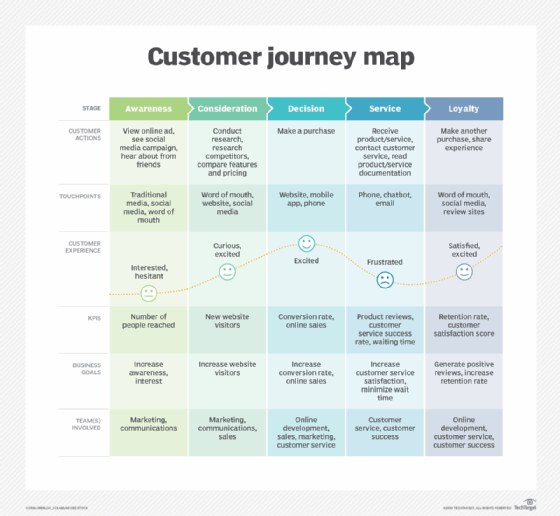
Fix the service path before you optimize it with AI
Contact center AI can improve routing, self-service and agent support, but it cannot fix weak journey design, broken handoffs or service problems created upstream.
Contact center AI can improve customer service, but it will not do much if it is dropped into a fragmented service environment.
In the same way, fragmentation in the customer journey will not produce the level of care businesses are aiming to deliver. AI by itself cannot fix weak processes or improve the customer experience when it is working in isolation.
Its real value shows up only when it is tightly integrated into the broader service environment. AI deployed willy-nilly, no matter how sophisticated, will not achieve much unless it is connected to the surrounding process, touchpoints and handoffs.
Contact center AI cannot fix a fragmented service journey
Organizations can have the latest contact center platforms and the hardware needed to support them. But without clear visibility into the customer journey, solid feedback loops and real ties to the larger enterprise software and organizational environment, the service team will struggle to deliver a consistent, positive customer experience.
That goes doubly for AI.
For AI to do more than improve a small slice of the journey here and there, it needs all of that already in place: a solid enterprise software foundation around data, governance, security and compliance; customer service tools that are well integrated; processes that actually work; and ways to monitor those processes and course-correct when needed.
So this story is about more than AI capabilities by themselves. It is about journey design, upstream ownership and the broader enterprise context that makes AI more useful once those things are in place.
Most of the problems the contact center deals with start somewhere else, and even when they do not, insight into other parts of the organization is often necessary to reach a good resolution. Without that broader organizational connectiveness, the contact center is somewhat handicapped in doing its job.
The same goes for the AI tools working inside customer service. They also need insight from across the company, filtered through the larger contact center stack, along with some level of management between agents and other AI tools inside service. Beyond that, orchestration with the wider AI environment across the enterprise is also necessary.
That is why contact center AI works best when it is integrated strategically into the service stack, not bolted on as a one-off feature in a single app or function.
4 questions to ask before optimizing contact center AI
Before turning to AI, leaders should ask a few harder questions:
Where is the customer journey actually breaking down?
Which contacts are being created upstream and should not exist in the first place?
Who owns the handoffs between service and the rest of the business?
Does the contact center have the data, knowledge and process discipline needed for AI to improve anything meaningful?
If those answers are weak, AI may only help the business move faster through the wrong part of the problem.
Routine contact center AI works better than complex service AI
AI is already becoming commonplace in the contact center. It is not thriving most in complex situations such as emotionally charged complaints, disputed charges, exception handling, multi-step service failures and retention conversations, however, where the human touch still matters. It is thriving in the same kind of narrow, repetitive, high-volume and structured use cases where AI is gaining traction across the enterprise: routing, self-service, agent assist, after-call summaries, knowledge retrieval, translation, intent detection, QA monitoring and surfacing the right information at the right moment.
That does not make those uses unimportant. It just puts them in perspective.
AI is helping most where the work is routine enough, repetitive enough and well defined enough to benefit from speed and structure. While useful, it is not the same thing as fixing a deeper service problem.
AI can optimize the wrong thing just as easily as the right one.
Journey visibility has to come before AI optimization
Visibility into the customer journey is especially important when it comes to effective AI use in the contact center. Sometimes -- and probably more often than companies would like -- service teams do not fully know where the journey is failing or why. That matters in many ways, but it matters especially for AI. Misread the breakdown point, and AI might not improve anything at all. It might simply help the organization move faster in the wrong direction by optimizing the wrong part of the problem.
That strengthens the case for having the right tools and processes in place before AI optimization begins. Companies need strong journey visibility, reliable analytics and a clearer picture of where service failures are actually being created.
In practice, that means understanding failure demand, upstream causes of contact volume and how the contact center connects to the rest of the customer service experience, as well as the business more broadly.
A contact center sees only part of the customer journey. To improve service with AI, companies need visibility into the touchpoints, breakdowns and ownership points that shape the experience before and after the service interaction.
AI should be applied -- or switched on, as is increasingly the case inside modern platforms -- only after those foundations are in place and the customer journey is well mapped. Otherwise, the company might gain speed without gaining much insight.
Most service problems start before the contact center
A lot of the contacts reaching a service team are not really contact center problems in the first place. They are the result of something breaking earlier: confusing bills, bad onboarding, weak self-service, poor product information, shipping failures, policy confusion or disconnected digital experiences.
That is why the real contact center AI work starts before the AI layer. If the business has not identified what keeps generating avoidable contact volume, then AI might only help the service team process the consequences faster.
This is where feedback loops matter. The contact center should not just absorb problems; it should help send what it learns back into the business so upstream teams can fix the conditions creating those contacts in the first place.
Product, billing, digital, operations, fulfillment and knowledge teams all have a role here. If what the contact center learns never makes it back to those groups, service ends up dealing with the symptoms while the underlying causes stay in place.
What better feedback loops look like in customer service
A useful feedback loop is pretty simple. The contact center keeps hearing what is going wrong, and that information has to make it back to the teams that can fix it. Billing issues should not stay in service. Product confusion should not stay in service. Broken self-service should not stay in service. If it does, the company just keeps having the same contacts over and over. The goal is not only to handle today's problem; it is to keep that same problem from showing up again tomorrow.
The contact center needs stronger ties to the broader business
That is also why journey design matters more than any single AI feature. If ownership is unclear, handoffs are weak and knowledge breaks down between teams, AI will inherit those weaknesses. It can summarize a broken interaction, route a customer through a weak workflow or accelerate self-service that still does not resolve the underlying issue.
AI can optimize the wrong thing just as easily as the right one.
The same logic applies to the wider enterprise software environment. AI in the contact center does best inside application stacks and processes that are already well built. It needs data that is usable, systems that are connected, governance that is in place and a service model that knows what it is trying to achieve. In the contact center, AI works best inside a process that already knows what it is trying to do.
In the contact center, AI works best inside a process that already knows what it is trying to do.
That is why the real contact center AI work starts in process design. It starts with mapping the journey, identifying where it breaks, clarifying ownership, tightening handoffs, improving knowledge and understanding what is creating service demand upstream. Only then does the AI layer have a real chance to do more than automate a small piece of a larger mess.
Once that work is done, AI can absolutely help. It can make service faster, reduce routine workload, support agents and improve consistency. But it works best as an amplifier of a healthy customer service system, not as a substitute for building one.
James Alan Miller is a veteran technology editor and writer who leads Informa TechTarget's Enterprise Software group. He oversees coverage of ERP & Supply Chain, HR Software, Customer Experience, Communications & Collaboration and End-User Computing topics.