The front office is being rebuilt around AI workflows
The front office is being rebuilt as AI moves from add-on features into connected workflows spanning customer service, research, marketing, data and business outcomes.
The front office is no longer just adding AI. It is starting to rebuild around it.
AI in the front office is no longer just about smarter customer service tools or chatbot-style add-ons. Increasingly, it is about how AI is embedded across CRM, contact center systems, digital engagement, analytics, customer data platforms, personalization engines and feedback tools, working more closely together than ever before.
The shift is turning the front office into a more connected technology environment. The shift is no longer just about adding isolated AI features, but about reorganizing front-office workflows around a more integrated stack designed to remove friction, personalize interactions and support business outcomes.
In that sense, AI is moving from the edge of the front office toward the center of how the stack operates. It is becoming less a standalone feature and more a built-in part of how front-office software handles data, decisions and customer interactions.
The front office is being rebuilt around a connected stack
The bigger change is structural. CRM, digital engagement, analytics, contact center systems and AI layers are increasingly being treated as parts of one system rather than a loose collection of separate apps.
The logic of integration is easy to understand. The harder question is how smoothly companies can connect and manage all these moving parts in practice.
Which is also why the advice to align tools with outcomes, not trends, matters. It helps keep the discussion grounded in outcomes rather than generic AI hype. The point is not that companies are adding AI because everyone else is. The point is that they are trying to justify a front-office rebuild around measurable outcomes: less friction, more personalization, better service, stronger loyalty and lower cost to serve.
Customer service is still a big part of that shift. But it is no longer the whole thing.
Salesforce's contact center push is a good example. It brings together voice, automation, CRM data, AI agents and digital channels into a single environment, with AI agents handling simpler cases and escalating more complex ones to human agents with fuller context.
RingCentral is making a similar case from another angle, with a three-agent workflow in which one system handles the initial interaction, another assists the human agent in real time, and a third analyzes the call afterward to improve the knowledge base for the next interaction.
The common thread is that the front office is increasingly being rebuilt around AI-human handoffs and multi-step workflows, rather than just isolated customer service features.
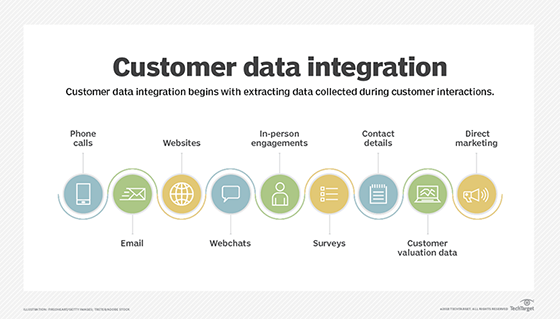
As AI spreads through the front office, unified customer data is becoming a foundation for more connected workflows across service, marketing and engagement.
The AI shift now reaches beyond customer service
But AI does not stop with customer interactions. It is moving upstream to marketing research, product development, testing and front-office decision support.
Qualtrics is a good example because it suggests the front-office shift is not just about service automation. It is also being rebuilt around faster, AI-mediated ways of understanding customers, testing ideas and generating answers from existing research data.
That is a step beyond customer service, where AI assists customer interactions or performs that task itself. Here, AI starts shaping the thinking and experimentation behind those interactions.
Research and insight work become more interactive and easier to query from existing data, rather than being trapped in static reports or specialist-led processes. Guided research acceleration matters for the same reason: It suggests AI is moving into the processes that help frontline marketers and product teams decide what to test, what to ask and what to build.
The usual AI cautions still apply. The speed and assistance AI offers can just as easily be undermined by bias and hallucinations, leading to incorrect insights.
The Qualtrics example goes beyond a simple product announcement. It is direct about the need for strong underlying human research and a solid foundation beneath the AI layer, rather than pretending the faster route is automatically the better one.
The front office is also becoming an intelligence layer
The front-office rebuild is not only about customer-facing workflows. It is also turning conversations, interactions and meeting data into a broader layer of business intelligence. Tools for employee conversational analytics already show how conversational data can surface customer pain points, product issues, sales opportunities and internal trouble spots earlier, while employee conversations, compliance systems and AI-generated meeting summaries expand that intelligence layer beyond classic CX inputs alone.
That can make these systems more useful to leaders trying to spot emerging patterns faster. But it also raises a second question alongside the integration one: privacy. Once organizations start using employee or internal conversation data for broader business intelligence, anonymization, legal compliance and clear employee communication matter much more.
In other words, the front office is not just becoming more automated. It is also becoming more observable, more queryable and more intelligence-driven. That might be powerful. It also means the front-office rebuild carries more governance and privacy weight than a typical software upgrade.
The payoff must be bigger than labor savings alone
The business case for this broader front-office rebuild goes well beyond automation. It is about more than speed, labor savings and cost reduction.
The stronger argument is that it can also drive revenue, reduce risk, improve customer experience and stabilize frontline workforces. That makes the rebuild of the front-office stack feel less like a software upgrade and more like a commercial outcomes push.
That wider lens makes the case for AI about business outcomes, not just vendor competition. Focusing only on cost reduction is too narrow. Revenue acceleration, risk mitigation, CX improvement and employee stability all become part of the case for AI.
The AI story does not stop with customer interactions. It is moving upstream to marketing research, product development, testing and front-office decision support.
The point is not just that AI can do work faster. It is that companies increasingly expect it to produce measurable business value. What still feels less settled is how those outcomes are consistently measured and how that measurement gets governed across increasingly complex front-office stacks.
Seen another way, the front-office shift is also an orchestration challenge -- though a narrower one than the broader enterprise-AI coordination lane. As front-office teams try to create more seamless, personalized journeys across channels, AI becomes part of the effort to unify data, respond in real time and coordinate interactions across touchpoints. That helps explain why the front-office rebuild touches marketing, service, data and engagement strategy all at once, including the push toward marketing-side integration and data unification.
In the end, the point is not that AI is doing everything now. It is that AI is increasingly embedded across the front-office stack in narrower, yet more connected ways, with the goal of improving customer and business outcomes simultaneously. That is why the front-office shift is bigger than service automation, but also more grounded than a generic claim that AI is changing everything.
James Alan Miller is a veteran technology editor and writer who leads Informa TechTarget's Enterprise Software group. He oversees coverage of ERP & Supply Chain, HR Software, Customer Experience, Communications & Collaboration and End-User Computing topics.